When is a bone graft needed for a dental implant?
When is a bone graft needed for a dental implant?
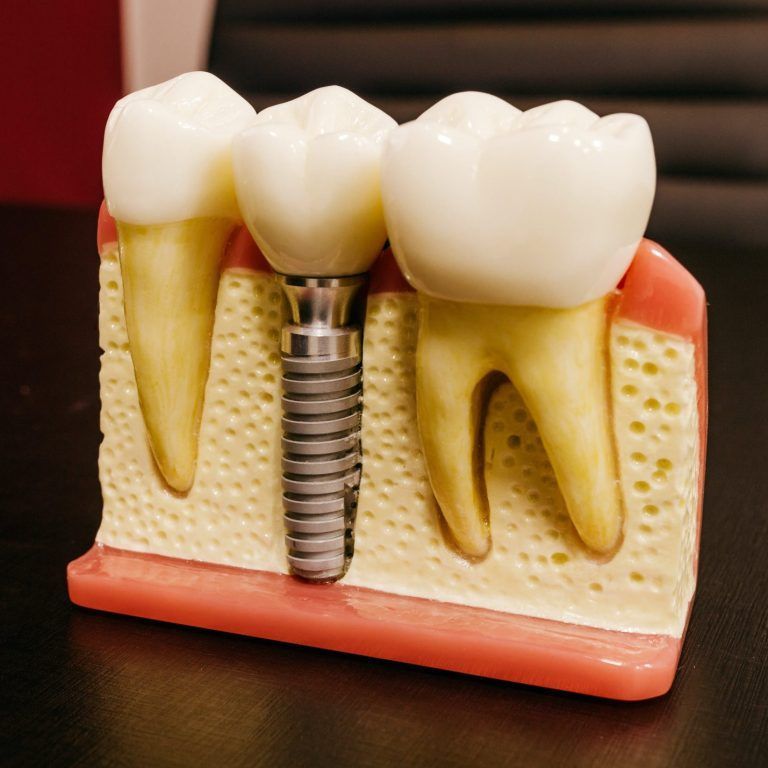
To place a dental implant, it is important to have enough bone in the area where the tooth was lost. When the bone does not have the proper volume or quality, it may be necessary to evaluate a bone graft before or during treatment.
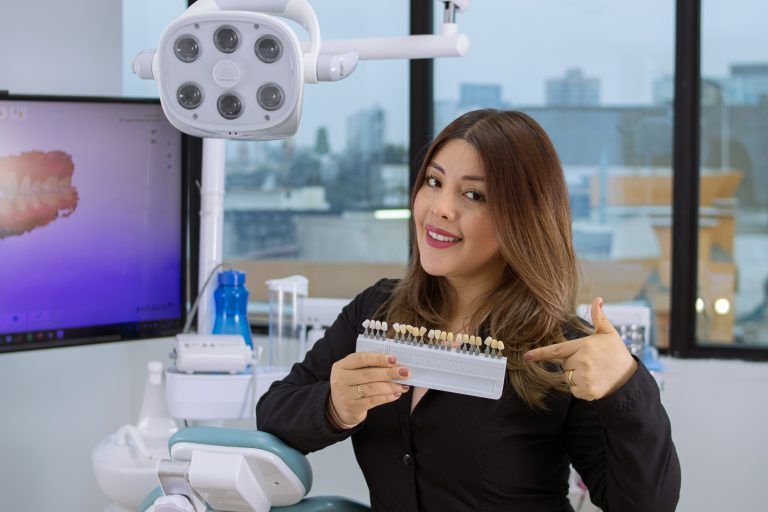
At V&C Odontólogos, we perform a personalized evaluation supported by digital diagnosis to determine whether the patient has the appropriate conditions for dental implant treatment.
What is a dental bone graft?
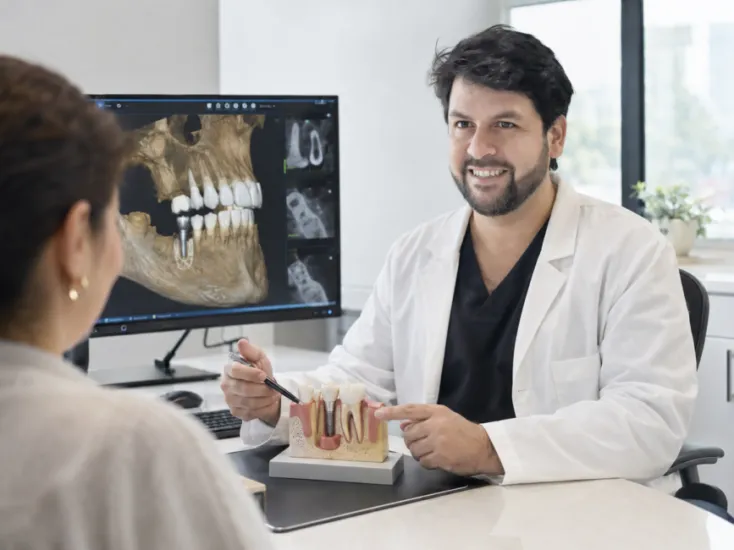
A dental bone graft is a procedure that aims to restore or improve bone volume in an area where a tooth has been lost. This may be necessary when the available bone is not sufficient to place a dental implant under appropriate conditions.
When a tooth is lost, the bone that used to support the root may decrease over time. This loss of volume can affect the stability, position, and planning of the future implant.
Bone loss
It may occur after an extraction, due to periodontal disease, infections, trauma, or when too much time has passed without replacing the tooth.
Prior evaluation
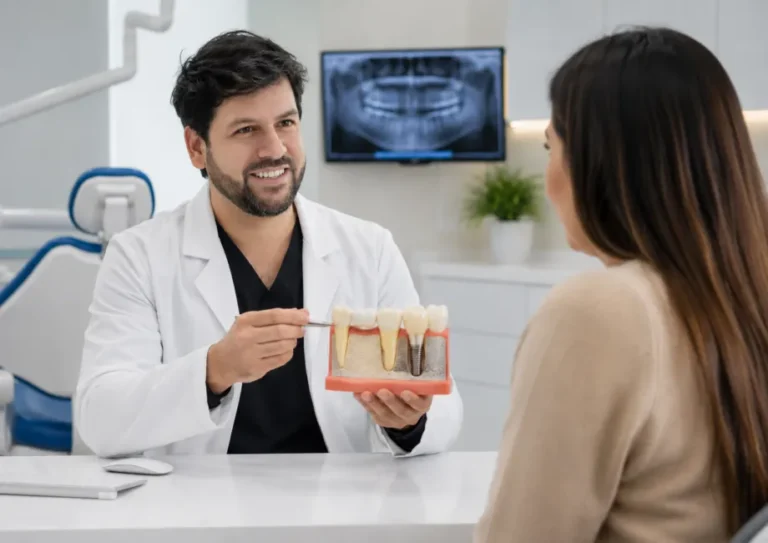
Not all patients need a graft. The indication depends on a clinical evaluation and, in many cases, studies such as 3D dental imaging.
Implant planning
The goal is to create better conditions so the implant can be placed in a functional, safe position that is compatible with the future crown.
For this reason, before starting dental implant treatment in Lima, it is important to review the condition of the bone and determine whether any complementary procedure is required.
When may a bone graft be necessary for a dental implant?
Not all patients who need a dental implant require a bone graft. This indication depends on the amount of available bone, the area where the tooth was lost, and how much time has passed since the tooth loss.
When a long time has passed since tooth loss
After losing a tooth, the bone may gradually decrease because it no longer receives stimulation from the root. If too much time has passed, it may be necessary to restore volume before placing the implant.
After a complex extraction
Some extractions may leave an area with less bone support, especially if there was infection, tooth fracture, or tissue loss around the root.
Due to periodontal disease
Periodontal disease can affect the bone that supports the teeth. Before planning dental implants, it is important to control gum health and evaluate the available bone support.
When the bone is very thin or low
To place an implant, an adequate bone volume is needed. If the area is too thin or has little height, a graft or another complementary technique may be evaluated.
In anterior aesthetic areas
In visible teeth, bone volume and gum shape influence the final result. For this reason, some cases require more detailed planning to achieve harmonious rehabilitation.
When 3D dental imaging shows low support
The 3D dental imaging allows the bone to be reviewed with greater precision. If the study shows low volume, the dentist may indicate a graft before or during treatment.
Why is 3D dental imaging important before an implant?
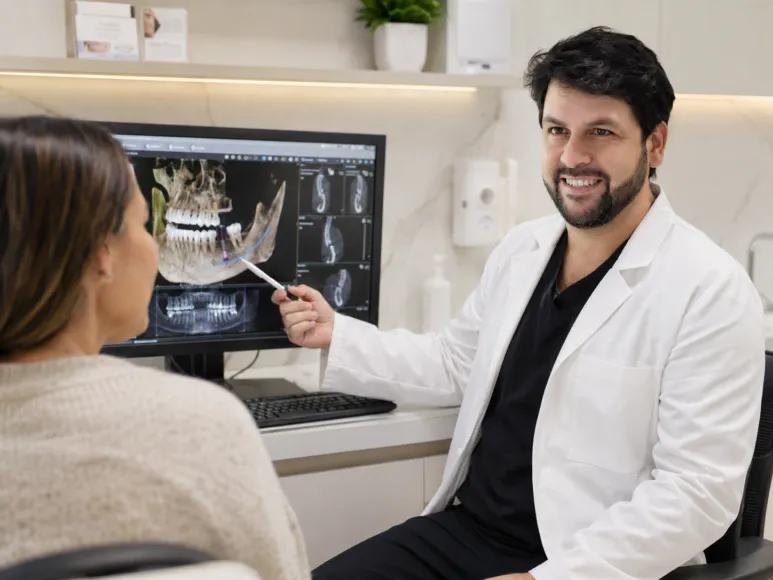
Bone evaluation should not be based only on a visual review. In many cases, 3D dental imaging allows us to observe the height, width, and shape of the bone where the implant is planned in greater detail.
This study helps identify whether there is enough bone support or whether a bone graft, sinus lift, or another complementary procedure may be necessary before starting treatment.
Allows us to measure the available bone volume.
Helps locate important anatomical structures.
Supports more precise planning of the implant position.
Helps determine whether the graft should be performed before or during implant placement.
At V&C Odontólogos
We use digital diagnosis to plan dental implant treatment in Lima with a personalized approach, considering each patient’s anatomy, function, and aesthetics.
- 3D CT Scan
- Intraoral scanner
- Digital planning
- Available bone evaluation
- Personalized treatment plan
Is a bone graft performed before or during the implant?
The timing of a bone graft depends on the available bone volume, the area to be treated, and the case planning. In some patients, it may be performed before placing the implant, while in others it may be done during the same surgery.
Graft before the implant
It may be indicated when there is significant bone loss. In these cases, the goal is first to restore bone volume and then, after a healing period, evaluate implant placement.
Graft during implant placement
In some cases, if the bone defect is minor and there is enough stability, the graft may be performed in the same procedure in which the dental implant is placed.
Preservation after an extraction
When a tooth is extracted, socket preservation may be evaluated to help maintain bone volume and facilitate future implant rehabilitation.
The decision depends on the evaluation
There is no single protocol for all patients. The indication for the graft, the timing of the procedure, and the waiting periods must be defined after a clinical and digital evaluation.
How is recovery after a dental bone graft?
Recovery after a dental bone graft may vary depending on the type of procedure, the treated area, and each patient’s response. In general, the dentist provides specific care instructions to support healing and control possible discomfort.
Swelling, tenderness or discomfort may occur during the first few days. These symptoms are usually managed by following the professional's instructions and should be monitored at follow-up visits. If you are also getting an implant, here we explain what it feels like day by day and how long the discomfort lasts.
Follow the medication and care instructions given by the dentist.
Avoid smoking, as it may affect healing and the treatment prognosis.
Maintain careful hygiene without traumatizing the treated area.
Attend follow-up visits to evaluate healing and plan the next stage.
How long is the waiting period?
The waiting time before placing the implant or continuing with rehabilitation may vary depending on the amount of regenerated bone, the type of graft, and the complexity of the case.
In some patients, the implant may be placed during the same surgery. In others, it may be necessary to wait several months before moving forward.
Ask about my case on WhatsAppWhat can happen if the bone is not properly evaluated before the implant?
Bone evaluation is an important part of dental implant planning. If it is not reviewed properly, the treatment may have a higher risk of complications or less stable results.
Inadequate implant position
If there is not enough bone, the implant may end up in an unfavorable position for the future crown, affecting function, hygiene, or aesthetics.
Lower initial stability
The implant needs appropriate conditions to achieve stability. When bone support is limited, it may be necessary to first plan a complementary procedure.
Aesthetic compromise
In visible areas, lack of bone volume may influence the shape of the gum and the final harmony of the implant-supported crown.
Difficulty with cleaning
Poor positioning of the implant or prosthesis may make daily hygiene more difficult and favor plaque accumulation around the area.
Greater future complexity
When the case is not planned properly from the beginning, correcting it later may require more complex treatments or additional stages.
Less favorable prognosis
Clinical and digital planning helps make better decisions before placing the implant, considering the bone, gums, bite, and aesthetics.
For this reason, before starting dental implant treatment, it is advisable to have a personalized evaluation and, when the case requires it, digital studies such as 3D dental imaging.
Frequently asked questions about bone grafts for dental implants
These are some common questions that may arise when a patient needs to evaluate whether there is enough bone for a dental implant.
Do all patients need a bone graft before an implant?
No. Many patients can receive implants without a graft, but others need to recover or improve bone volume before or during treatment. The indication depends on the clinical and digital evaluation.
How do I know if I need a bone graft?
The best way to know is through a dental evaluation. In many cases, 3D dental imaging allows the dentist to measure the available bone and plan the treatment more accurately.
Is the bone graft done on the same day as the implant?
It depends on the case. If the bone loss is mild and there is enough stability, it may be performed during the same procedure. If the bone loss is greater, it may be necessary to perform the graft first and place the implant after a healing period.
How long does it take for a dental bone graft to heal?
Healing time varies depending on the type of graft, the treated area, and the patient’s response. In some cases, it may be necessary to wait several months before continuing with implant placement.
Does a bone graft guarantee that I can get an implant?
A bone graft aims to improve bone conditions, but each case must be monitored and reevaluated. The dentist will determine whether the conditions are appropriate to move forward with the implant.
What happens if I do not have enough bone for an implant?
If there is not enough bone, the dentist may evaluate alternatives such as bone grafting, complementary techniques, or other rehabilitation options, depending on the condition of the mouth, bite, and the patient’s goals.
Need to know if you have enough bone for a dental implant?
If you are considering a dental implant and do not know whether you need a bone graft, schedule an evaluation at V&C Odontólogos. We will review your case with digital diagnostic support to guide you toward the most appropriate alternative.
At V&C Odontólogos, we evaluate:
- Available bone quantity and quality.
- Gum condition and neighboring teeth.
- Need for bone grafting or complementary procedures.
- Ideal dental implant position.
- Personalized treatment plan according to your case.