
Does getting a dental implant hurt? What it really feels like, day by day
If fear of pain is making you put off your implant, here we explain clearly what you will feel during surgery, how many days the discomfort lasts and when it's time to call us.

No, getting a dental implant placed does not hurt. It is done under local anesthesia, so you will only feel pressure or vibration. When the anesthesia wears off, mild to moderate discomfort appears, strongest between 24 and 72 hours, and it clearly eases between day 3 and day 7. If the pain gets worse after the third day, it should be checked.
What's normal to feel, moment by moment
Approximate times for an implant with no additional procedures. With an extraction, bone graft or several implants, recovery may take a few more days.
What do you feel while the implant is being placed?
Before starting, the area is numbed with local anesthesia, the same used for an extraction. Once it takes effect, you are awake but feel no pain. What you may notice:
Pressure
You feel work being done in the area, especially while the bone is prepared and the implant is placed.
Vibration and sound
The instruments vibrate and make noise. It sounds worse than it feels.
30 to 60 minutes
What a single implant usually takes. We take breaks if you need them.
Many patients tell us afterwards that they expected something much worse. The fear beforehand is usually bigger than the actual discomfort.
Does it hurt more than an extraction?
Tooth extraction
Force is needed to remove the tooth. Recovery usually takes a few days.
Single implant
For many patients it feels similar or even easier, because no tooth has to be removed.
When the implant is placed at the same time as the extraction (immediate implant), recovery is similar to that of an extraction.
Day-by-day recovery
The first hours
Anesthesia lasts roughly 2 to 4 hours. Take the first dose of the prescribed painkiller before it wears off. Slight bleeding that tints your saliva on the first day is normal.
Days 1 and 2
The time of greatest discomfort: a dull ache or tenderness that responds well to the prescribed medication. Cold on the outside of the face helps (20 minutes on, 20 minutes off).
Days 2 and 3
Swelling peaks. It may show on the gum and sometimes on the cheek. A small bruise sometimes appears. It is a normal part of healing.
Days 3 to 7
Discomfort decreases day by day and many patients no longer need painkillers. Gradually return to your normal diet, without chewing on the implant side.
Second week
In most cases there is no discomfort anymore. The area is usually checked and, if there were stitches, they are removed.
What makes it hurt more or less?
Number of implants
One implant is not the same as a full-arch rehabilitation in a single session.
Additional procedures
Extraction, bone graft or sinus lift add a few days to recovery.
Area of the mouth
Each area has different bone and gum.
Gum and bone
Healthy gums and good bone volume make for a shorter surgery.
Prior planning
A well-planned surgery is usually more precise and less invasive.
Follow the instructions
Cold, rest, a soft diet and taking medication on schedule greatly reduce discomfort.
Does placing the abutment and crown hurt?
In general, no. Once the implant has integrated with the bone (usually after a few months), the abutment and then the crown are placed. These are much simpler procedures: sometimes a little local anesthesia is used and sometimes it isn't even needed. Usually you only feel pressure while the piece is adjusted.
Can an integrated implant hurt?
A healthy, well-integrated implant should not hurt. The implant has no nerve, so if pain, bleeding, a bad taste or a feeling of movement appears months or years later, there may be inflammation of the gum around the implant (peri-implantitis) or a problem with the crown. In that case, get it checked soon.
Regular check-ups and good hygiene are the best prevention. Read more in How long does a dental implant last?
How technology helps make surgery more comfortable
When you know in advance where and how to place the implant, surgery tends to be shorter, more predictable and with fewer surprises. And that shows in recovery too.
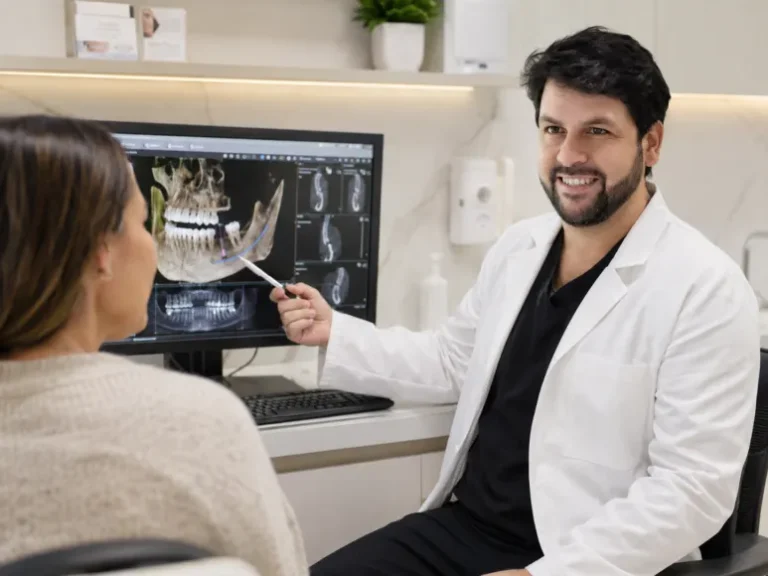
Technology at V&C Odontólogos
- 3D CT scan: measures the bone and locates nerves and maxillary sinuses.
- Intraoral scanner: digital impressions without putty.
- Digital planning: ideal implant position before surgery.
- In-house digital lab: CAD/CAM, Sirona PrimeMill milling unit and Sirona SpeedFire furnace.
Visit our 2D and 3D imaging center.
I'm very afraid of the dentist. Can I get an implant?
Yes. It's much more common than it seems, and some patients put off treatment for years because of fear. The important thing is to mention it at your evaluation.
For anxious patients, conscious sedationmay be considered: you are relaxed during the procedure, but you keep breathing on your own and can respond. Whether it's indicated depends on your general health, medical history and the complexity of the case.
Aftercare for an easier recovery
- Cold on the outside of the face: 20 minutes on, 20 minutes off.
- Don't rinse vigorously, spit or use a straw.
- No smoking or alcohol.
- Sleep with your head slightly raised.
- Soft, lukewarm or cold diet: mashed potatoes, yogurt, lukewarm soups, scrambled eggs.
- Avoid very hot, hard, spicy or crunchy foods. Chew on the opposite side.
- Brush gently without touching the wound, and use the prescribed mouthwash.
- Take your medication on schedule. Don't self-medicate.
- Avoid intense exercise for 2–3 days.
- Attend your check-ups to monitor healing.
- Keep good hygiene around the implant.
- Ask about any concern instead of waiting.
Warning signs: when to call us
- Pain that increases after the third day.
- Severe pain that doesn't ease with medication.
- Swelling that keeps growing after day 3.
- Bleeding that doesn't stop after 20–30 min of pressing with gauze.
- Fever, pus, a persistent bad taste or general malaise.
- Numbness of the lip or chin the next day.
- A feeling that the implant or temporary tooth is moving.
When in doubt, it's better to call than to wait.
Common questions about pain and implants
Does getting a dental implant hurt?
Not during surgery. It's done under local anesthesia, so you only feel pressure or vibration. Afterwards, mild to moderate discomfort may appear for a few days.
How many days does a dental implant hurt?
With a single implant, discomfort is usually greatest during the first 48–72 hours and clearly eases between day 3 and day 7. If there was a bone graft or several implants, it may last a few more days.
How long does implant surgery take?
A single implant usually takes 30 to 60 minutes. Cases with several implants or a bone graft may take longer.
Which hurts more, an implant or an extraction?
For many patients, placing a single implant feels similar to or even easier than a tooth extraction.
Can I work the day after getting an implant?
In most simple cases, yes, especially for office jobs. If the procedure was more extensive or your job is physically demanding, it's best to set aside 2 or 3 days.
Does placing the crown on the implant hurt?
Generally not. It's a simple procedure in which you usually only feel some pressure.
Can I get implants if I'm afraid of the dentist?
Yes. Mention it at your evaluation. For some patients, conscious sedation may be considered to make the procedure calmer.
Is it normal for my implant to hurt months later?
No. A healthy, integrated implant should not hurt. If pain, bleeding or movement appears, get it checked to rule out peri-implantitis or a problem with the crown.
Is a 3D CT scan always needed before an implant?
It's highly recommended, because it allows the implant to be planned according to the available bone and nearby structures. Your dentist will indicate the tests needed in your case.
More about dental implants
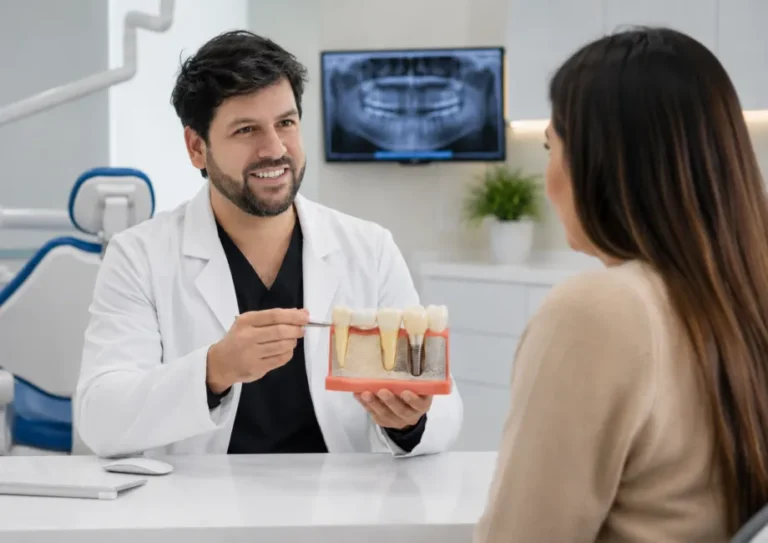
Don't let fear of pain hold you back
Book an evaluation at V&C Odontólogos. We'll review your case with digital diagnostics, explain each stage and tell you clearly what to expect.
San Borja
Av. de las Artes Nte. 364, San Borja, Lima
Barranco
Av. San Martín 459, Barranco, Lima
The information in this article is for guidance only and does not replace a personalized clinical and CT evaluation. Whether implants, sedation or complementary procedures are indicated depends on each patient.



